Sola Mahjong
- 4.9
- Rating
- 50.00K
- Installs
- Free
- Price

 Analysis by App-foxy
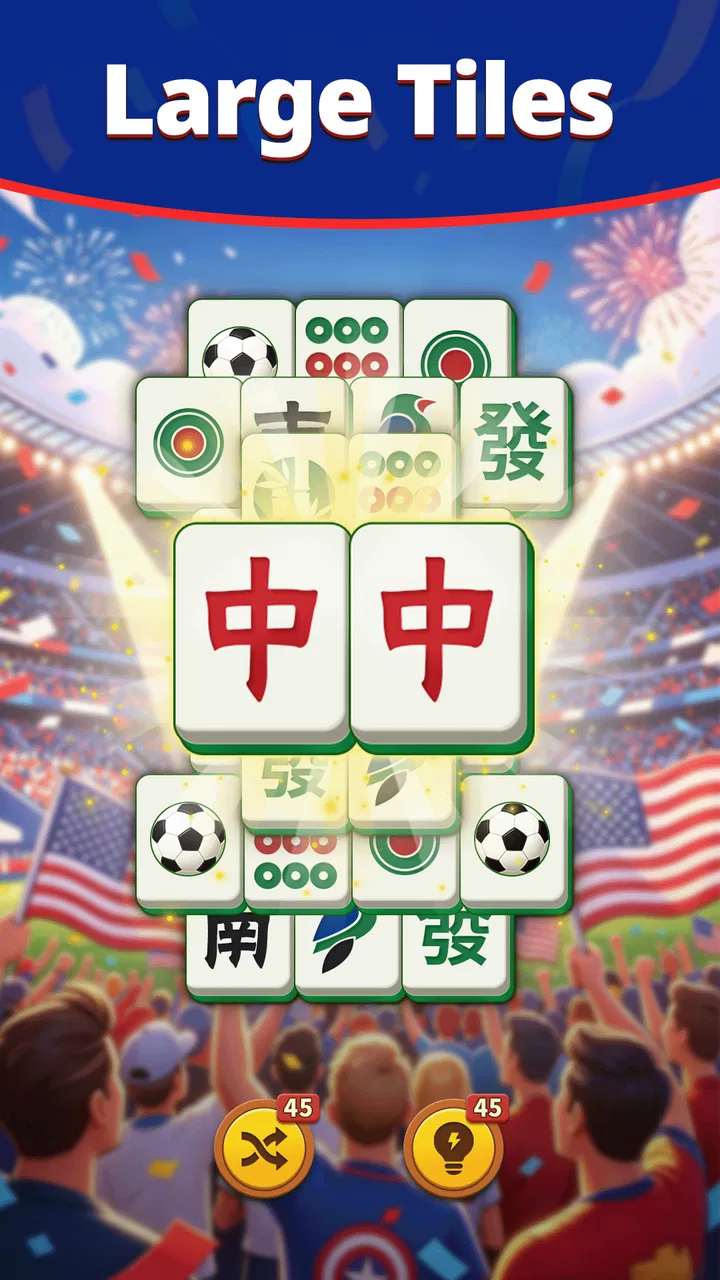
I like casual games that know when to stay out of the way. Sola Mahjong takes that approach with a quiet mahjong puzzle experience built around large tiles, simple matching, and play that does not depend on an internet connection. After spending time with it, I see the appeal immediately: it is less about chasing a score or mastering a complicated system and more about giving your attention one calm task at a time.
This is a free casual game from NEXT INITIATIVES LIMITED, rated for Everyone. Its current version is 1.1.2, and it runs on devices using Android 6.0 or later. The game has reached over 50 thousand installs and holds a 4.9 average from around 3 thousand ratings, which fits the experience I had: the concept is easy to understand, and the large visual presentation removes much of the strain that can make traditional tile games uncomfortable on a phone.
Still, a simple game is not automatically perfect for everyone. The main question is whether you want a relaxing, solvable puzzle with a gentle pace, or whether you need competition, deep progression, social play, or a constant stream of new mechanics. I will focus on the practical side of using it: where a player may get stuck, what to check during setup, how to recover when a session does not behave as expected, and when the problem may actually be the device rather than the game.
You May Also Like

 AccuWeather: Weather Radar
AccuWeather Review: A Quick, Clear Forecast for Everyday Decisions
For everyday plans, the best forecast is the one you can understand quickly. AccuWeather makes rain timing, radar, and local conditions easy to act on, with a few trade-offs.

 Hill Climb Racing
Why Hill Climb Racing Still Turns Crashes Into One More Run
A tiny car, a bumpy hill and one more upgrade: Hill Climb Racing keeps resurfacing because its simple chaos makes every near-miss feel personal.

 AliExpress - Shopping App
AliExpress Makes Global Shopping Feel Personal, but Shoppers Bear the Risk
AliExpress turns a global marketplace into a pocket-sized discovery engine. Its reach is useful, its shopping loop compelling, and its trade-offs easy to miss.

 Lords Mobile: Kingdom Wars
Lords Mobile Is a Kingdom-Building Routine, Not a Quick Match
A case-by-case verdict on the building, battles, device demands, and social commitments that make Lords Mobile rewarding for some players and exhausting for others.

 PDF Scanner app - TapScanner
TapScanner Makes Paperwork Easier to Capture, Check, and Share
TapScanner makes scanning with a phone feel less like a rescue operation and more like a dependable step in getting work done. Its capture tools are useful, though not flawless.

 Block Blast!
 Shows How Much a Puzzle Game Can Leave Out
A quiet grid game shows why puzzle players increasingly value instant clarity, repeatable skill and low-pressure play—and where the genre still needs to catch up.
More From Our News Desk
View All News


What playing Sola Mahjong feels like in everyday use
I find Sola Mahjong easiest to appreciate as a small, self-contained pause: I can settle into a board without needing to learn a larger game world or keep up with other players. In everyday use, that makes it a natural fit for waiting rooms, quiet evenings, or a short break away from a connection. The way its visual choices support that unhurried mood is worth looking at next.
A calm puzzle for short, focused sessions
The basic rhythm is familiar. You look across a layout, find matching tiles, and remove them in pairs. That sounds straightforward, but the satisfaction comes from choosing the right match before the board becomes less flexible. I found that the large tiles make this process more comfortable than it is in many mobile mahjong games, especially when I played without zooming in or holding the phone close to my face.
The game is a good fit for small gaps in the day. I can imagine opening it while waiting for an appointment, taking a quiet break after work, or playing a few boards before bed. Because the emphasis is on solvable puzzles rather than pressure, I do not feel pushed to keep up with a timer or respond to other players. That makes it easier to stop after one puzzle instead of losing track of time.
There is also a useful mental distinction between “easy to operate” and “mindless.” The controls are approachable, but the board still asks me to look ahead. Removing an obvious pair can expose a useful tile, while taking another pair first may leave fewer choices later. The game does not need a complicated tutorial to create that small layer of planning.
Why the large-tile design matters
Large tiles are not merely a cosmetic choice here. They reduce the chance of tapping the wrong symbol, make the board easier to scan, and help players who find dense mobile interfaces tiring. That makes the game particularly suitable for older relatives, people with less confidence using touchscreens, or anyone who prefers a generous layout over a crowded one.
Even with large tiles, the phone itself still matters. A small display, low brightness, glare, or a dirty screen can make matching symbols harder than the game intends. I get the clearest experience when I hold the device steadily and use a comfortable brightness level rather than trying to play in direct sunlight.
One practical tip is to pause before tapping the first pair. I scan the full board and identify matches that seem to open several possible routes. This is more reliable than immediately removing the easiest-looking pair. It also turns the game into a short concentration exercise rather than a sequence of random taps.
Who will enjoy it, and who should skip it
I would recommend this game to someone who wants a low-pressure puzzle, prefers clear visuals, and values the ability to play offline. It is especially appealing if competitive leaderboards, daily rewards, and social invitations usually make a game feel noisy. The senior-friendly presentation is meaningful because it supports comfortable reading and tapping without requiring the player to learn a complicated interface.
I would not choose it for a player who wants a broad adventure, character collection, multiplayer matches, or a strong long-term progression system. A person who already plays demanding strategy games may also find the experience too restrained. The same simplicity that makes it welcoming can make it feel limited if you need constant novelty or a sense of escalating challenge.
Compared with a physical mahjong solitaire set, this version is more convenient because the board is ready immediately and there are no tiles to arrange or gather. Compared with busier mobile alternatives, it feels less distracting. The trade-off is that a physical set can be more tactile and social, while a feature-heavy digital game may offer more variety. Sola Mahjong sits firmly on the quiet, practical side of that comparison.
Where players may get stuck first
The first point of friction is usually not the matching rule. It is recognizing which tiles can actually be selected. When a board contains several similar symbols, I can mistake a visual resemblance for a valid pair or overlook a match because the tiles are separated across the layout. Taking a moment to compare the complete symbol, not just its color or general shape, prevents unnecessary taps.
A second issue is assuming that every visible pair should be removed immediately. In a puzzle built around solvable layouts, the order of moves can matter. If I clear a pair that exposes a less useful area while leaving a more flexible pair untouched, I may create a board that feels blocked even though the earlier choice caused the problem. My best habit is to prioritize moves that uncover covered tiles or increase the number of available choices.
A third source of confusion is the difference between a genuinely unavailable move and a missed move. I check the board from left to right, then from top to bottom, instead of repeatedly staring at the same central area. Moving the phone slightly can also change reflections and make pale symbols easier to distinguish.
The most useful habit is to treat each move as a choice about future visibility, not just an immediate match. That small change in thinking makes the puzzles feel more deliberate and helps explain why a board can become difficult even when many tiles remain.
Setup checks before blaming the game
Because the game is free and designed for straightforward casual play, getting started should be uncomplicated. I would begin with the ordinary checks that solve many mobile problems: confirm that the device meets the Android 6.0 minimum, make sure the installation has finished completely, and restart the game after an interrupted install or system update.
If the screen looks cramped, I first check the phone’s display settings rather than assuming the board is broken. Text and interface scaling, display zoom, orientation behavior, and accessibility settings can alter how comfortable the layout feels. A large-tile game should remain readable, but the final result still depends on the device’s screen and the settings applied to it.
For offline play, I test the game once in a normal connection and then again after switching to a no-connection situation. This gives me a practical baseline. If the game opens and puzzles load normally offline, I know I can use it in places such as travel, waiting rooms, or areas with unreliable reception. If something behaves differently, I avoid repeatedly reinstalling before checking the basic device state.
Storage is another sensible check. A device that is nearly full can behave unpredictably during installation or updates, even when an app itself is modest. I also close unusually demanding background apps if the phone is older or already running slowly. These steps do not change the game’s design, but they can remove avoidable setup friction.
Recovering a session without losing your patience
When a tap seems not to register, I do not immediately tap several times. I wait briefly, lift my finger fully, and try one deliberate tap on the center of the tile. Rapid repeated touches can make it harder to tell whether the issue is recognition, a temporary pause, or simply a tile that is not available.
If the board appears frozen, I leave the current screen and reopen the game once. If that does not help, I restart the device before taking more disruptive steps. This order matters because it preserves the possibility of returning to the current session and avoids treating a temporary slowdown as a permanent failure.
For a puzzle that seems impossible, I retrace the last few moves mentally. I look for a pair that became inaccessible because I removed another tile first, then scan the remaining board systematically. Since the game is built around solvable mahjong puzzles, a stalled board is a reason to review the move order before concluding that the level itself is defective.
One useful workflow is to take a mental snapshot at the beginning of a board. I note which symbols are exposed and which areas look tightly packed. If I later reach a dead end, I can identify the decision that reduced my options instead of restarting randomly. This is a small technique, but it makes the game more relaxing because mistakes become information rather than irritation.
When the app is not the cause
Touch problems often come from the phone. A screen protector with poor sensitivity, damp fingers, a case pressing against the display edge, or a damaged touch area can all look like missed game input. I test another part of the screen or another app before deciding that Sola Mahjong is responsible.
Visual difficulty can also be external. Glare, aggressive battery-saving dimming, night-display filters, and unusual color settings may reduce contrast between tiles. I prefer a stable brightness level and indirect light. If the symbols remain hard to separate, the limitation may be the display rather than the large-tile layout.
Performance complaints deserve the same careful approach. If the whole phone is slow, other apps are closing, or the device is hot, restarting and reducing background activity is more sensible than repeatedly reinstalling one casual game. An offline game can avoid connection problems, but it cannot compensate for a device that is struggling generally.
There is also a difference between an app issue and a network expectation. Offline support is one of the game’s strongest practical qualities, but a player may still encounter normal device behavior around installation, updates, or the app store itself. I separate those stages: first get the app installed properly, then test the actual puzzle experience without a connection.
How I would use it with an older player
If I were setting this up for a parent or grandparent, I would not simply hand over the phone and walk away. I would open one puzzle, demonstrate one pair, and explain that the goal is to look for identical tiles rather than tap quickly. I would also adjust the device’s brightness and make sure the person can hold the phone comfortably.
The large tiles give the player a helpful starting point, but confidence comes from the first successful board. I would encourage slow scanning and explain that a pause is part of the game, not a sign that the player is doing something wrong. The offline nature is useful here because the player does not need to understand a connection indicator before beginning a puzzle.
For family use, the game works best as a shared calm activity rather than a competitive one. I can sit beside someone and discuss which pair might open more of the board. That creates a little conversation around the puzzle without requiring accounts, matchmaking, or a complicated ruleset. It is a different kind of value from a multiplayer title, but it is genuine.
What the version and popularity suggest in practical terms
The game was released on January 30, 2026, and its current version is 1.1.2. I treat that information as a reminder to keep the installed version current when possible, particularly if I encounter an issue that may have appeared after installation. Updating is a reasonable first maintenance step, but I would still check the device and session before assuming an update is necessary to solve every problem.
Its 189 written reviews and roughly 3 thousand ratings show that the game has attracted a noticeable audience, while the 4.9 average indicates that its focused design is landing well with many players. I would not interpret that as a promise that every person will enjoy it. High satisfaction is most relevant for people who want exactly what this game emphasizes: clear tiles, solvable puzzles, and a relaxed pace.
The developer, NEXT INITIATIVES LIMITED, has kept the identity of the product easy to understand. That matters because I do not have to learn a long list of systems before playing. The game’s value is concentrated in the board itself, so the quality of the visual presentation and the reliability of basic touch interaction matter more to me than decorative extras.
Where another option may be better
I would choose a more feature-rich mahjong game if I wanted timed challenges, a large collection of modes, frequent events, or a stronger sense of progression. I would choose a physical set if I wanted to play around a table with other people. I would choose a different casual puzzle if I preferred wordplay, numbers, or fast reactions instead of visual matching.
There is also a trade-off between offline convenience and connected ecosystems. A connected game may provide social competition or synchronized progress across devices, while this experience is better suited to a self-contained session. For someone who changes phones often or expects elaborate account features, the simpler approach may feel too narrow.
My advice is to decide based on the kind of attention you want to give the game. If you want ten quiet minutes with a board that can be understood immediately, this is a strong candidate. If you want the app to surprise you with new systems every few minutes, you will probably outgrow it quickly.
My practical verdict
Sola Mahjong succeeds because it commits to a clear purpose. It offers a free, casual mahjong experience with large tiles, offline usefulness, and a presentation that is friendly to older players and anyone who dislikes cramped mobile interfaces. I especially value the way it turns a familiar puzzle into something I can pick up without preparation and put down without feeling that I have abandoned a larger game system.
Its limitations are closely tied to those strengths. The quiet design may feel sparse to players who expect rewards, competition, or constant content. A missed tap or difficult board can also require patient checking of the screen, move order, and device rather than an immediate in-game solution. That is not a reason to reject it, but it is worth understanding before installing.
For me, the best use case is a phone kept nearby for calm, offline breaks: a short session during a commute without dependable reception, a gentle puzzle after dinner, or a shared activity with someone who benefits from larger visual targets. I would install it for that purpose, keep my expectations focused on mahjong solitaire rather than a full game platform, and recommend it to a friend who wants simple puzzles that respect their pace.
FAQs for Sola Mahjong
01What is Sola Mahjong and how is it different from traditional Mahjong?
Sola Mahjong is a digital adaptation of the classic Mahjong game, designed for mobile devices on Android and iOS. Unlike traditional Mahjong, which is typically played with four players, Sola Mahjong is a solitaire version. It focuses on matching and removing pairs of tiles from a layout, offering a relaxing and solitary gaming experience.
02Does Sola Mahjong require an internet connection to play?
No, Sola Mahjong can be played offline. Once the app is downloaded and installed on your device, you can enjoy the game without needing an internet connection. This makes it perfect for playing while traveling or in areas with limited connectivity.
03Are there any in-app purchases or ads in Sola Mahjong?
Sola Mahjong is free to download, but it may contain ads and offer in-app purchases. These purchases can include additional tile sets, themes, or hints to enhance your gaming experience. Ads can usually be removed through a premium upgrade or one-time purchase within the app.
04How does Sola Mahjong ensure variety in gameplay?
Sola Mahjong features numerous layouts and difficulty levels to keep the gameplay engaging. It also offers different tile sets and themes, which can be unlocked as you progress. The game often updates with new challenges, ensuring that players always have fresh content to explore.
05Is Sola Mahjong suitable for beginners and advanced players?
Yes, Sola Mahjong is designed to be accessible to both beginners and advanced players. The game includes a tutorial for newcomers and various difficulty levels to challenge seasoned players. Additionally, hints and undo options are available to assist players in learning and improving their skills.
Pros
- Engaging and intuitive gameplay.
- Beautiful and calming graphics.
- Challenging levels for all skill levels.
- Regular updates with new features.
- Offline play available.
Cons
- In-app purchases can be pricey.
- Limited free hints available.
- Ads can be frequent and intrusive.
- Some levels feel repetitive.
- Initial tutorials are minimal.

Sola Mahjong
Gallery